


How do no-scratch mittens work?

No-scratch mittens work by covering a baby’s fingernails so they’re less likely to brush against the baby’s face. A closure or cuff helps keep the fabric over the hands. They don’t stop every scratch: if a mitten slips off or a nail catches while you’re dressing your baby, you still need to check the fit and keep nails trimmed.
- How do no-scratch mittens work? Fabric covers the nails; a cuff or closure keeps the mitten over the hand.
- Goumikids Sandstone baby mittens have a two-part closure designed to help them stay on.
- Check that mittens stay in place without squeezing, and give your baby time with uncovered hands.
Why this matters
A tiny hand can reach a cheek while you’re changing a diaper or trying to get everyone dressed. Mittens put fabric between the nails and the skin. But the useful part isn’t just the covered fingertips; it’s whether the mitten stays on through ordinary movement. If that’s the problem you’re trying to solve, the guide to whether stay-on mittens actually stay on takes a closer look at retention.
In 2026, choose no-scratch mittens by fit and closure, not by a promise that they’ll prevent every scratch. You can check both while your baby is awake: watch whether the fabric stays over the fingertips, then look at the wrist when you take the mitten off. A mitten that keeps sliding down needs adjusting or replacing. One that leaves the wrist looking compressed isn’t the right fit.
How do no-scratch mittens work?
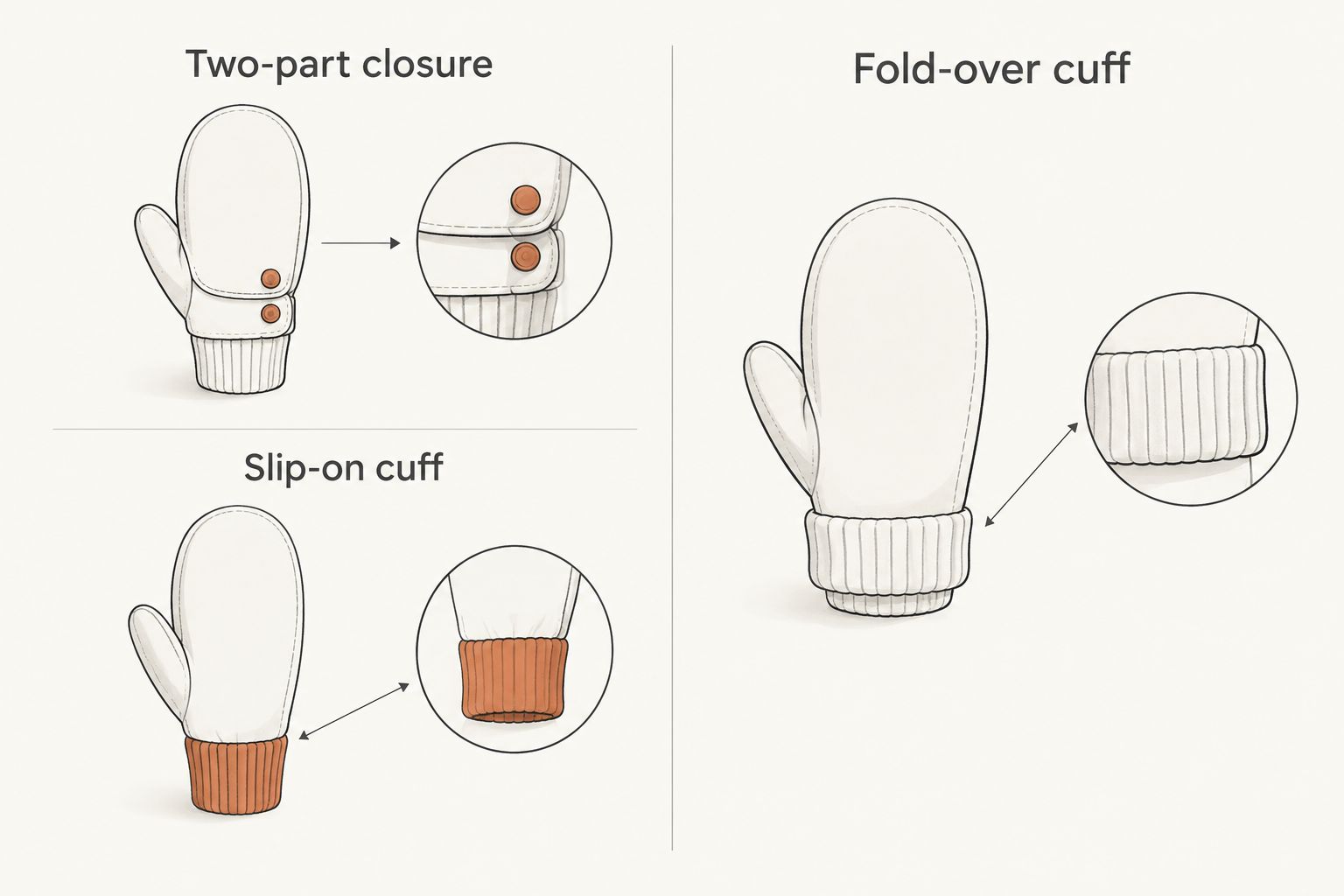
They cover the nails and rely on a cuff, closure, or built-in sleeve fold to keep that cover in place. The designs differ most in what happens when a baby opens and closes a hand or waves an arm. That’s why two mittens made from similarly soft fabric can be very different to use during a diaper check.
| Option | How it covers the nails | Best for | Trade-off |
|---|---|---|---|
| Goumikids Sandstone baby mittens | A fabric mitten with a two-part closure designed to stay on | Parents who want a separate mitten with a closure | You still need to check the wrist fit and whether the mitten stays in place |
| Fold-over cuff on a sleeve | The sleeve cuff folds over the hand | Dressing a baby in a garment that already has this feature | The hand stays covered only while that sleeve is worn and the cuff remains folded |
| Basic slip-on mitten | A fabric cover held by its cuff | A simple separate cover for the hand | A loose cuff can slide off during movement |
Goumikids Sandstone baby mittens are best for parents who want a separate no-scratch mitten with a two-part closure. That closure addresses the stay-on problem, but it isn’t a substitute for checking the fit on your baby.
The table also shows why the label no-scratch isn’t enough to make a choice in 2026. All three options cover nails. The practical question is how each cover stays over the hand when your baby moves, and how easily you can uncover the hand when you need to.
What does the closure actually do?
The closure’s job is to help hold the mitten at the wrist so the fabric remains over the fingers. It doesn’t make the nail less sharp, and it doesn’t replace nail care. Think of the mitten as a cover and the closure as the part that helps keep the cover where you put it.
Goumikids' two-part closure combines elastic with a hook-and-loop fastening. The checked Sandstone listing specifies 70% bamboo viscose and 30% organic cotton, with separate 0–3M and 3–6M options. Follow the selected pair's fastening instructions and check hand room and wrist fit; adjustment doesn't make the whole mitten larger.
A fold-over cuff takes a different approach. The cover is part of a garment’s sleeve, so there’s no separate mitten to look for during a half-asleep change. Its limitation is just as clear: you can’t use that cuff independently of the garment. A separate mitten gives you that choice, but it’s another small item to keep track of.
Why a no-scratch mitten stays on or slips off
The answer comes down to the mitten on the baby, not the wording on its label. These are the checks that matter:
- Wrist fit. The cuff or closure needs to hold the mitten in place without feeling tight. Check the wrist after wearing it, not just when you first put it on.
- Hand coverage. Fabric needs to remain over the fingertips. If a baby’s fingers push past the end or the cover folds back, the nails aren’t covered.
- Closure design. A slip-on cuff, a two-part closure, and a fold-over sleeve each hold the cover in place differently. Choose the design you can put on and check easily.
- Baby movement. A mitten that looks secure on a still hand can shift as a baby moves. Watch it during normal awake time.
- Garment choice. A fold-over cuff works only with the garment it’s attached to. Separate mittens work independently of a sleeve, provided they fit.
Start with the wrist, then look at the fingertips. That order catches both common problems: a mitten that won’t stay on and a mitten that stays at the wrist while leaving the nails exposed. Recheck after a change of clothes, especially when sleeves bunch around the wrist.
Pack size is a separate decision. The Goumikids catalog includes 2-pack and 3-pack mitts, but those numbers describe how many pairs you’re considering, not how any one pair fits. Pick the closure and fit first. Decide how many you need after that.
How to check mittens on your baby
Check them while your baby is awake and you can see what happens when those little hands move. You don’t need to guess from a product photo.
- Put the mitten over the whole hand, with the fingertips inside the fabric.
- Fasten or position the cuff as the design allows. Don’t tighten it just to stop slipping.
- Let your baby move their hands. Look for fabric that slides back or a mitten that comes off.
- Remove the mitten and look at the wrist. If the area appears compressed or irritated, don’t keep using that fit.
- Give your baby time with hands uncovered, and keep fingernails trimmed so mittens aren’t your only way to manage scratches.
These steps apply whether you’re trying separate mittens or checking a fold-over cuff. For a sleeve cuff, the fit check includes the garment: if the sleeve pulls the cover away from the fingers, the cuff isn’t doing the job you put it there to do.
A separate mitten has an everyday advantage when you need to uncover a hand without changing the outfit. It also has a downside you’ll notice quickly: you must check for it after a diaper change or a stretch of movement. If one mitten is missing, look for it before you rely on the other.
Do mittens replace trimming a baby’s nails?
No. Mittens put a temporary layer between nails and skin; trimming or filing addresses the nails themselves. Keep up with nail care in 2026 even if your baby wears no-scratch mittens during parts of the day.
The distinction matters when a mitten comes off. A cover works only while it’s on, and a baby’s hands don’t stay still just because you’re busy fastening a clean diaper. Treat mittens as an extra layer of help, not the whole plan.
Should a baby wear no-scratch mittens all day?
No. Babies use their hands to touch and explore, so make room for uncovered-hand time while you’re watching them. If scratching is your concern, check the nails and use mittens for the moments when a cover is useful rather than leaving them on by default.
For sleep, the question isn’t simply whether a mitten is labeled stay-on. You need to consider the baby’s sleepwear and whether a separate item could come off. Follow your pediatrician’s advice for your baby and use a clear sleep space rather than treating a product name as a safety assurance.
Are fold-over cuffs better than separate mittens?
Neither design wins for every baby. A fold-over cuff keeps the cover attached to the sleeve, which can simplify dressing; a separate mitten can be used with different outfits. The better choice in 2026 is the one that covers your baby’s fingertips, fits at the wrist, and suits how you dress them.
If you’re getting dressed half asleep, count the steps that bother you. An attached cuff means no separate mitten to find. A separate pair means you can uncover a hand without changing the garment. Those are practical differences, not claims that one design prevents every scratch.
FAQ
How do no-scratch mittens work on newborns?
No-scratch mittens cover a newborn’s fingernails with fabric, while a cuff or closure helps keep the cover on the hand. Check that the fingertips stay covered when your baby moves.
Do no-scratch mittens stop every scratch?
No-scratch mittens don’t stop every scratch. They only cover nails while the fabric stays over the hand, so fit checks and nail care still matter.
What keeps baby mittens from falling off?
A well-fitting cuff or closure helps keep baby mittens on. Watch the mittens during awake movement, and don’t use a tight wrist fit to compensate for slipping.
What is a two-part mitten closure?
Goumikids' two-part closure combines elastic with a hook-and-loop fastening. Check the exact product's instructions and actual hand and wrist fit; a closure doesn't guarantee retention or sleep safety.
Are fold-over cuffs the same as no-scratch mittens?
Fold-over cuffs serve the same covering purpose, but they’re part of a garment’s sleeve rather than separate mittens. They work only when that garment is worn and the cuffs remain over the hands.
Can a baby still use their hands while wearing mittens?
Mittens cover the hands, so set aside supervised time with hands uncovered for touching and exploring. Use the covers when they’re useful, not as a replacement for nail care.
How do I tell if newborn mittens fit?
The fabric should cover the fingertips and stay in place during awake movement without squeezing the wrist. Remove the mittens and check the skin if the fit looks tight or leaves irritation.
One last thing
The most useful test happens after you put the mittens on, not before you buy them. In 2026, watch your baby move, check that the nails remain covered, and take a look at the wrist when the mittens come off. If either check fails, a stay-on label doesn’t fix the fit.