


How long do newborns need to wear mittens?

There is no fixed number of weeks that every newborn needs mittens. Consider why you're covering the hands, whether the mittens fit and what your pediatrician recommends for your baby. A stay-on closure helps with slipping; it doesn't establish a medical need or an overnight safety guarantee.
- How long newborns need mittens has no universal age cutoff or four-week average established in this guide.
- Check actual fit and the reason for hand coverage, not just the age label.
- Persistent scratching or skin concerns belong with your pediatrician, not a longer automatic mitten schedule.
- Goumikids stay-on mitts offer adjustable hand coverage; they don't replace nail care or individual medical advice.
- Treat supervised wear and sleep as separate decisions.
How long do newborns need to wear mittens?
Use the reason for hand coverage as your starting point, rather than counting down to a birthday. If scratching is the concern, check sharp nail edges and ask for help with nail care if you need it. If your baby has a skin condition or a specific care plan, ask the clinician whether hand coverage is appropriate and when to reassess it.
The stay-on baby mitts collection provides adjustable options when you choose hand coverage. It doesn't turn a size label into a recommended duration. A 0–3M size describes a product option, not an instruction to keep the hands covered for three months.
| Situation | What to check | Next step |
|---|---|---|
| Occasional scratches | Sharp nail edges and the circumstances in which scratches happen | Ask for nail-care guidance if you're unsure |
| Mittens that slip or bunch | Hand room, wrist fit and the supplied closure instructions | Reassess fit; don't add tape or ties |
| Persistent scratching or irritated skin | The underlying concern, not just mitten size | Ask your pediatrician about care and hand coverage |
| A baby leaving the NICU | The individual discharge instructions | Confirm whether hospital hand-coverage advice applies at home |
| Choosing clothing for sleep | The sleep setup and whether hand coverage is detachable | Follow safe-sleep guidance and ask about individual concerns |
Why this matters
A fresh scratch can make a parent feel as though they missed something. You don't need another deadline to worry about. A general article cannot tell you that your baby must wear mittens for four weeks, that all babies stop at three months or that early birth automatically means longer use.
This guide is about choosing and reassessing clothing. It isn't a diagnosis, a treatment plan or a prediction about development. Separate what you can check yourself—fit, condition and care instructions—from questions that need your baby's clinician.
Reassess fit instead of assigning a timeline
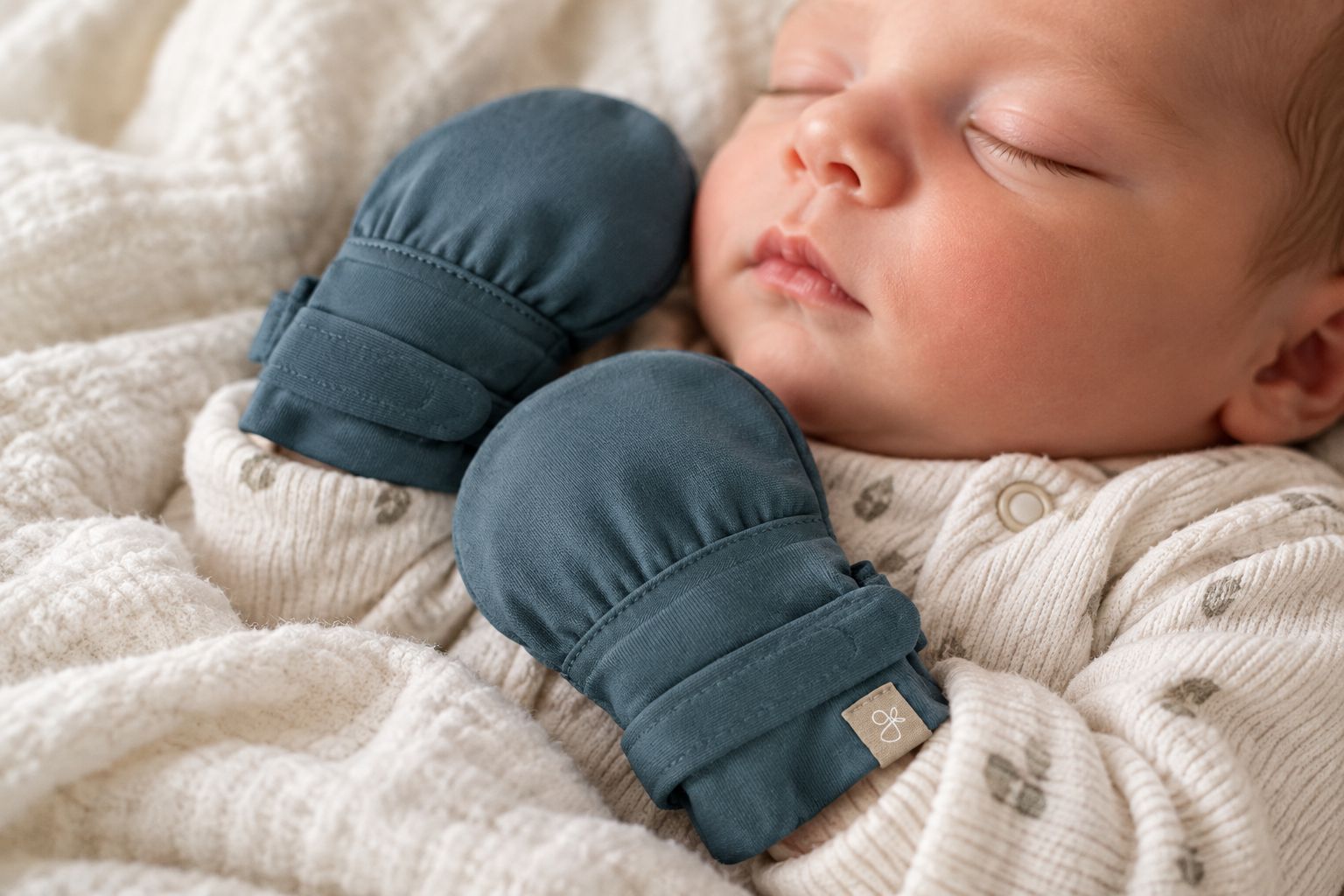
Follow the instructions for the mittens you own. Check the hand and wrist when putting them on and reassess if the fingers crowd the end or the fabric bunches. An adjustable fastening doesn't make a mitten fit indefinitely.
If a mitt comes off, don't assume tightening it is the answer. Check the size and fastening first. Remove the mitten and seek advice if you notice pressure marks, swelling or a change in skin color.
Goumikids describes its closure as a two-part system with elastic and a low-profile hook-and-loop fastening. That is a construction detail, not a promise that every pair remains on in every situation. It also doesn't tell you how long your individual baby needs covered hands.
Why the decision varies
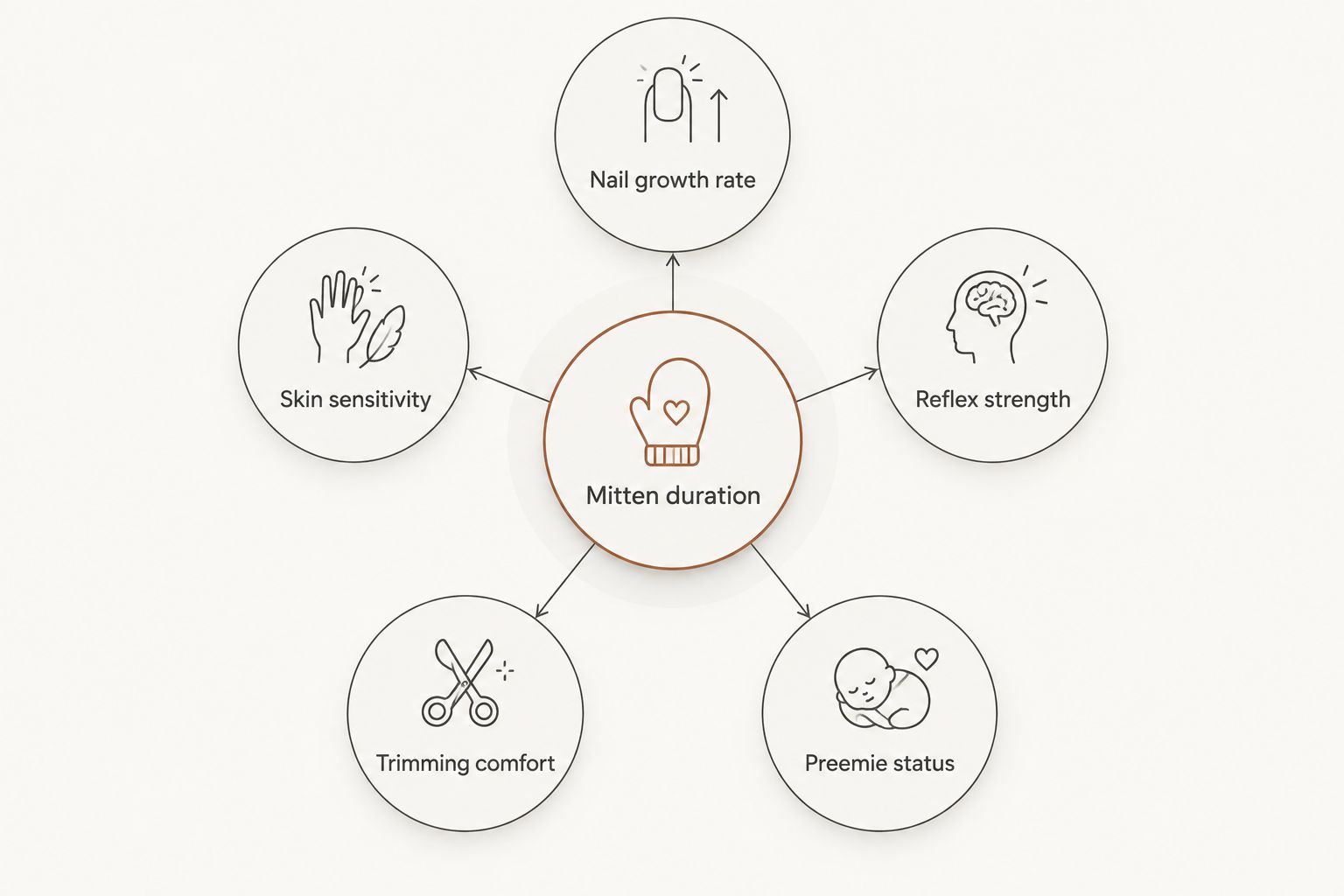
- Reason for coverage: a clothing choice differs from hand coverage recommended for a specific clinical concern.
- Actual fit: hand and wrist fit matter alongside the label.
- Skin concerns: persistent irritation needs individual advice rather than an automatic extension of mitten use.
- Care setting: a NICU routine isn't automatically a home routine.
- Sleep versus awake wear: a detachable accessory raises a different question at bedtime than during supervised wear.
“A mitten size label is not a schedule for how long to cover your baby's hands.”
What about mittens during sleep?
For routine sleep, bare hands or cuffs attached to properly fitting sleepwear avoid adding a separate mitten that could come off. That is the precaution used in this guide, not a claim that the AAP specifically bans all mittens.
The American Academy of Pediatrics' safe-sleep guidance, checked in October 2026, recommends back sleeping on a firm, flat surface and keeping soft objects and loose bedding out of the sleep area. It also advises avoiding overheating. That source doesn't certify an individual mitten closure for sleep.
If a clinician has recommended hand coverage, ask how that advice applies during sleep. For a preemie, follow the discharge plan and clarify questions with the care team. Don't copy another baby's hospital routine.
Do newborns need mittens in the hospital?
Ask the team caring for your baby. Hospitals and individual care plans differ; this guide doesn't establish that mittens are a default requirement after every birth. Ask what, if anything, you should continue at home.
What if scratches keep happening?
Ask your pediatrician about persistent scratches, irritated skin or broken skin. Mittens aren't a substitute for assessing the concern. Nor is choosing a pale color a treatment for eczema.
When you choose mittens, follow the care label and replace wet or damaged items as appropriate. For the exact fabric and pack details, use the product listing rather than assuming every pair has the same features.
FAQ
How long do newborns need to wear mittens?
There is no universal number of weeks. Reassess the reason for hand coverage and the actual fit, and ask your pediatrician about ongoing scratching or a medical concern.
Is four weeks the average time newborns need mittens?
This guide does not establish a four-week average. A fixed average should not be used as a care instruction for an individual baby.
Does a 0–3M mitten need to be worn for three months?
No. The label is a size option, not a recommended duration of use. Follow the product's fit instructions and individual care advice.
Can mittens replace nail care?
No. Hand coverage is separate from nail care. Ask your baby's clinician to show you an appropriate nail-care method if you aren't confident.
Should newborns wear separate mittens for sleep?
For routine sleep, this guide favors bare hands or attached cuffs over a detachable mitten. This is a precaution, not a mitten-specific AAP ban; ask your pediatrician about individual needs.
Do preemies always need mittens longer?
No automatic longer timeline is established here. Follow the NICU discharge instructions and ask whether hand coverage should continue at home.
What if mittens leave marks or keep falling off?
Remove a poorly fitting mitten and reassess the size and fastening. Ask a clinician about pressure marks, swelling or changes in skin color rather than fastening it more tightly.
One last thing
Keep the clothing decision small: why are you using the mitts, do they fit, and has anything changed? You don't need to keep using them because an online calendar says you should.