


Can newborns wear mittens and boots together?

Yes, newborns can wear mittens and soft baby boots together when each piece fits properly and the combination doesn't make them too warm. Mittens cover the hands, while booties cover the feet; neither is required for every baby or every outfit. Check the whole outfit, leave time for bare hands while your baby is awake, and follow your care team's instructions for a preemie or baby with medical needs.
- Can newborns wear mittens and boots together? Yes, with comfortable fit and appropriate layers.
- Goumikids newborn mittens and boots offer adjustable closures for parents who want separate hand and foot coverings.
- Skip extra booties when your baby's feet are already comfortably covered.
- Give your awake baby time with bare hands; mittens aren't an all-day requirement.
Can newborns wear mittens and boots together?
Yes. Choose mittens and boots separately based on what your baby needs, not because they came as a matching set. A baby wearing an open-foot outfit might use both. A baby in a footie might need neither, or only temporary hand coverage.
If you're deciding between separate accessories and an all-in-one outfit, start with how to choose between mitts and boots or a footie. The useful question is what the outfit already covers.
| Outfit choice | Best for | What it offers | What to watch |
|---|---|---|---|
| Mittens and soft boots | Separate hand and foot coverage | You can remove either piece independently | More pieces to fit, check, and keep track of |
| Mittens without boots | Temporary hand coverage when feet are already covered | No unnecessary second covering on the feet | Hands still need uncovered time while awake |
| Boots without mittens | Foot coverage with hands free | Your baby can move and explore with bare hands | Check ankle fit and toe room |
| Footie without separate accessories | A simpler outfit with covered feet | Fewer separate pieces | Check whether the garment has hand covers before adding mittens |
| Neither accessory | Comfortable, supervised awake time when extra coverage isn't needed | Hands and feet stay uncovered | Reassess clothing when the setting changes |
Why this matters
You're getting dressed half asleep. One sock has disappeared, and your baby's nails keep catching their cheek. It's understandable to reach for both mittens and boots.
But a complete-looking outfit isn't the goal. Comfortable coverage is. For your 2026 newborn wardrobe, choose pieces that solve a real problem without adding an unnecessary layer or making skin checks harder.
Mittens aren't a replacement for nail care. Boots aren't a replacement for checking whether your baby is comfortably dressed. Use either accessory when it helps, and leave it off when it doesn't.
Check the outfit before adding anything
Start with what your baby is already wearing. Look at the sleeves, hands, legs, and feet rather than treating accessories as the final required step.
An outfit with enclosed feet already provides foot coverage. Adding booties changes the amount of fabric around those feet and ankles. An outfit with fold-over hand covers already offers a way to cover the hands, so separate mittens add another piece to manage.
For an open-foot outfit, soft booties provide separate coverage that you can remove without changing the whole garment. That flexibility is useful when you move between settings or notice that your baby no longer needs them.
Don't add mittens and boots just to finish the outfit. Add each piece for a reason, then check whether that reason still applies after a feed, change, or move to another room.
Fit comes before matching
A mitten should leave room for your baby's hand without squeezing the wrist. A boot should leave room for the toes without gripping the ankle tightly. Neither should depend on an overtightened closure to stay in place.
Age labels are a starting point, not proof of fit. The supplied Goumikids boot listings include styles labeled 0–6 months and 0–12 months, as well as a newborn-specific option. Those labels describe different listings; they don't mean every baby fits every listed style from birth.
Check the exact size you select. A broad age range in a product title doesn't replace the item's sizing information or a hands-on fit check.
If an accessory slides off repeatedly, reassess the size and closure. Don't tie it on, add elastic bands, or improvise a tighter fastening. A piece that doesn't fit comfortably isn't the right piece for that moment.
A quick check after getting dressed
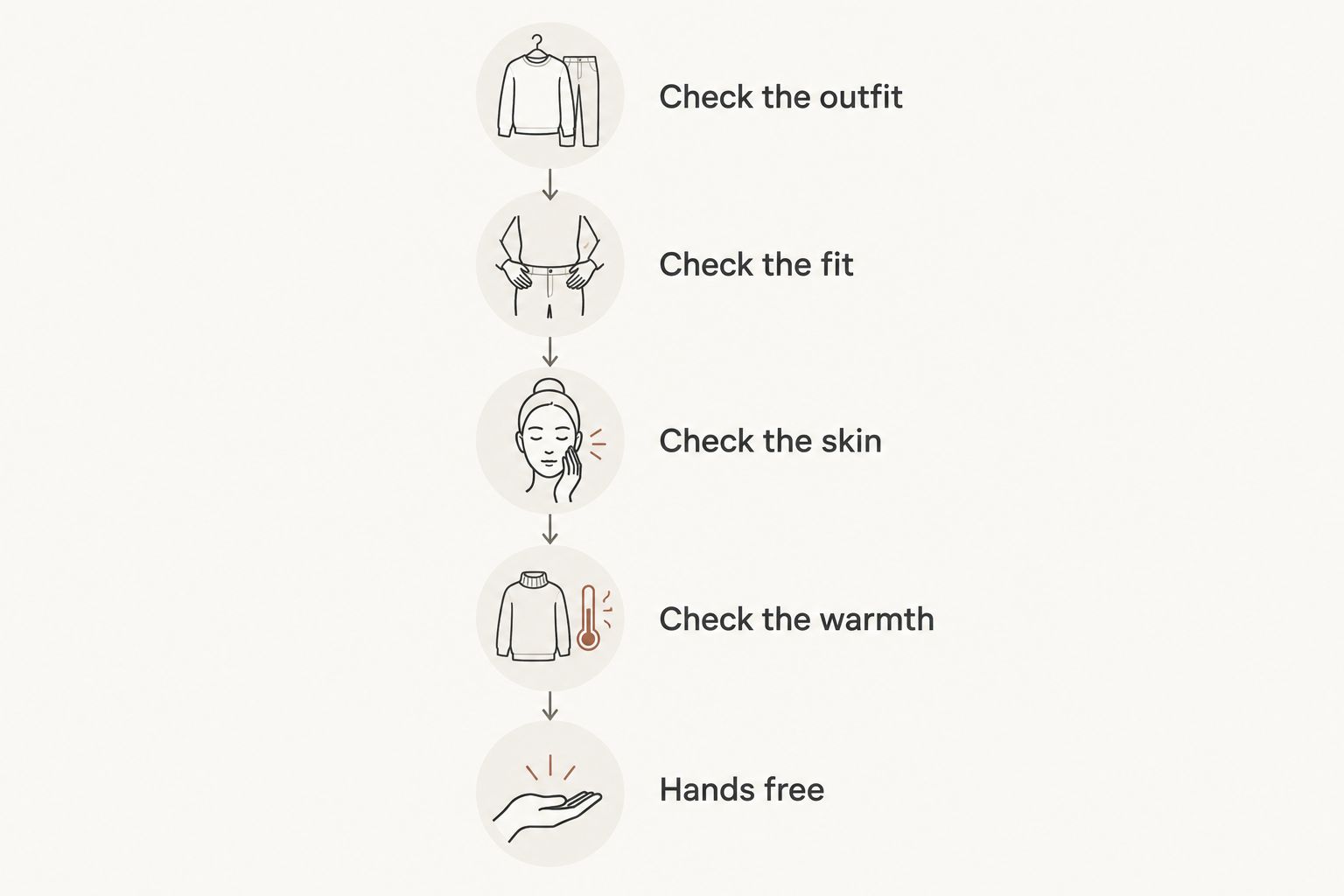
You don't need a complicated routine. Make these checks part of getting dressed, then repeat them when you remove the accessories for a diaper change or another care moment.
- Check the outfit. Notice any built-in hand or foot coverage before adding separate pieces.
- Check the fit. Look for hand space, toe room, and closures that aren't pressing into the skin.
- Check the skin. Remove the pieces and look for persistent marks, irritation, or anything unusual.
- Check the warmth. Feel your baby's chest or upper back rather than deciding from cool hands or feet alone.
- Hands free. Offer supervised awake time without mittens so your baby can move their hands freely.
Remove an accessory if it feels damp, looks uncomfortable, or isn't staying properly fitted. If you notice unusual swelling, persistent color changes, or another concerning symptom, contact your baby's clinician rather than trying another size to solve it.
Why the right combination varies
The same baby doesn't need the same accessories in every setting. Your 2026 clothing plan can stay simple while still leaving room to change your mind.
- Existing coverage: Enclosed feet or fold-over hand covers change whether separate accessories serve a purpose.
- Individual fit: Hands and feet don't have to fit the same age-labeled size.
- Room and outdoor conditions: The surroundings affect how much clothing your baby needs.
- Fabric and construction: Thickness, layers, and closure placement matter alongside the material name.
- Awake or asleep: Awake time allows supervised breaks for bare hands; sleep requires its own safety checks.
- Care-team instructions: A preemie or baby with medical equipment needs an individualized clothing plan.
Matching colors don't change any of these checks. Neither does buying the pieces together. Keep the pair together in the drawer if that helps, but decide whether to use each piece separately.
Mittens: useful sometimes, not all day
Mittens provide a fabric barrier between nails and skin. That can be useful during a stretch when your newborn keeps catching their face, but it doesn't remove the need to keep nails cared for.
Bare hands matter, too. During supervised awake time, let your baby move their fingers and bring their hands toward their mouth without mittens in the way.
There's no universal all-day mitten schedule that fits every newborn. Use your baby's needs and your clinician's advice rather than a fixed routine copied from someone else's baby.
Check inside the mitten when you take it off. Look for moisture, loose threads, and anything that needs cleaning or repair. If the skin looks irritated, leave the mitten off and ask your clinician about persistent irritation.
Boots: soft coverage, not walking shoes
Here, boots means soft baby booties, not structured outdoor footwear. Newborns don't need walking shoes to support walking, and a soft bootie shouldn't restrict the toes to stay on.
Booties are most useful when your baby's feet are otherwise uncovered and the setting calls for coverage. If a footie already keeps the feet comfortably covered, another layer isn't automatically helpful.
Adjustability gives you a way to change the closure as you check the fit. It doesn't make an oversized boot suitable, and it doesn't mean you should tighten the ankle until the boot cannot move.
Take the booties off during routine care so you can check the feet. Missing socks are annoying. A comfortably dressed baby matters more than keeping every accessory on.
Two options for separate coverage
Goumikids newborn mittens and boots are best for parents who want adjustable, separate hand and foot coverings. The supplied descriptions identify a signature two-part closure, but comfortable fit still needs checking on your own baby.
For a 2026 shopping list, choose the option that fills an actual gap. You don't need a set if you only need foot coverage.
| Option | Best for | Supported feature | Limitation |
|---|---|---|---|
| Stay On Mitts + Boots Set: Storm Gray | Parents looking for both types of covering | Adjustable mitt-and-boot duo with a two-part closure | Each piece still needs its own fit check; both aren't always needed |
| Newborn Stay On Boots: Midnight | Parents looking for newborn-specific foot coverage | Newborn-size boot listing with an adjustable two-part closure | Boots provide foot coverage only; the size label doesn't guarantee fit |
Check the exact item's fabric details and care instructions before choosing. A bamboo-and-organic-cotton blend name doesn't establish the precise percentages for every style. Features and sizing also vary by item.
Can my newborn wear both while sleeping?
Wearing both isn't, by itself, a reason to consider an outfit suitable for sleep. Check secure fit, total layers, and your baby's comfort, and ask your clinician if you're unsure about separate accessories.
Keep the sleep basics separate from the outfit decision: place your baby on their back on a firm, flat sleep surface with no loose bedding or soft objects. Mittens and booties don't prevent SIDS or make an unsafe sleep setup safe.
If an accessory comes off, remove it from the sleep space. Don't add ties or makeshift fasteners to keep it attached. For 2026 sleep planning, start with the sleep setup and suitable clothing—not an accessory's stay-on name.
Does my baby need both if their hands and feet feel cool?
Cool hands or feet alone don't tell you whether your baby needs more clothing. Check the chest or upper back and look at the whole outfit before adding layers.
Sweating or a hot chest can signal that your baby is too warm. Remove unnecessary clothing and reassess. If your baby seems unwell or you're concerned about their temperature, seek medical advice rather than treating it only as a clothing question.
Mittens and boots are clothing choices, not tools for diagnosing or managing illness. You don't have to cover every cool-feeling hand or foot.
What changes for a preemie or NICU baby?
A preemie or baby in the NICU needs the care team's direction on mitts, boots, and other clothing. Ask whether either accessory is appropriate with the isolette, monitoring, skin needs, and equipment your baby uses.
When the team recommends them, mitts and boots can be considered before fuller clothing. Gowns are a later option when the team says fuller clothing is appropriate. Neither accessory independently controls core temperature or guarantees that a baby won't pull a tube.
Don't carry a hospital clothing plan home without checking the discharge instructions. Your baby's needs and setting have changed. A 2026 home routine should follow the current advice for your baby, not historical hospital practices or another family's experience.
FAQ
Can newborns wear mittens and boots together in 2026?
Yes, newborns can wear mittens and soft boots together when both fit comfortably and the overall outfit is appropriate. Check each piece separately and leave off anything your baby doesn't need.
Should my newborn wear mittens all day?
No, mittens aren't an all-day requirement for every newborn. Give your baby supervised awake time with bare hands, and use mittens only when they serve a purpose or your care team recommends them.
Does my baby need boots over a footie?
Not automatically; a footie with enclosed feet already provides foot coverage. Check your baby's comfort and the surroundings before adding another layer.
Are newborn boots the same as shoes?
Soft newborn booties are foot coverings, not structured walking shoes. Choose a comfortable fit that leaves room for the toes and doesn't squeeze the ankles.
Can mittens and booties make my baby too warm?
Yes, extra clothing contributes to the total layers your baby wears. Check the chest or upper back and remove unnecessary pieces if your baby feels hot or is sweating.
How do I choose Goumikids newborn mittens and boots?
Choose the exact item and size that fit your baby's hands or feet, then check the closure and skin during routine care. Product age labels and adjustable closures don't replace an individual fit check.
Can a preemie wear mittens and boots in an isolette?
Only use mittens and boots according to your baby's NICU team's instructions. The team decides what works with temperature support, skin checks, monitoring, and medical equipment.
One last thing
A matching set doesn't have to be worn as a set. Keep the mittens off when your baby is comfortably exploring with bare hands. Keep the boots off when the feet are already covered.
Use the piece that helps, not every piece you own. That keeps getting dressed simpler and makes it easier to notice when fit or comfort changes.