


Can a Nursing Robe Be Worn During Pregnancy? Yes—2026

Yes, you can wear a nursing robe during pregnancy if it gives your bump room, stays comfortable when you sit, and closes without pulling. Nursing access alone doesn't make a robe maternity-friendly, so choose by fit rather than the label.
- Can a nursing robe be worn during pregnancy? Yes, when the fit allows comfortable movement and coverage.
- A wrap opening offers adjustment, but enough front overlap matters more than a long belt.
- Choose maternity loungewear by seated fit, sleeve clearance, and easy breastfeeding access—not the product label.
- Goumikids women's robes include bamboo viscose and organic cotton options; check each style's fit before choosing.
Why this matters
You don't necessarily need separate robes for pregnancy and feeding. You need a robe that works when you're getting dressed, sitting on the couch, and opening the front with a baby nearby. Those moments ask different things of the same garment.
Goumikids' Women's Robe in Sandstone has a stated blend of 70% bamboo viscose and 30% organic cotton. That tells you what the fabric contains, not how much room the robe gives your bump. Check the size information and construction separately from the fabric description.
Can a nursing robe be worn during pregnancy too?
Yes. A nursing robe can serve as pregnancy loungewear when its cut accommodates your changing shape without uncomfortable pressure or unwanted gaps. The same opening that gives you feeding access after birth can also make getting dressed simpler during pregnancy.
For your 2026 shopping checklist, separate the opening from the fit. A robe can open easily and still feel tight across your belly. It can also have plenty of room but awkward sleeves or a closure you keep adjusting.
| Robe construction | Best for | Practical benefit | Limitation to check |
|---|---|---|---|
| Wrap-front robe | Adjustable closure and front access | You can reposition the closure rather than fasten a fixed row of buttons | Front panels still need enough overlap across your bump |
| Button-front robe | Defined fastening points | You can open the front without pulling the whole garment overhead | Buttons can pull or leave gaps when the body is too narrow |
| Pullover lounge layer | Coverage without a front fastening | There isn't a belt or button row to manage | Getting it on and reaching underneath for feeding can be less convenient |
These are construction choices, not guarantees. A roomy button-front robe can fit better than a narrow wrap robe. Choose the garment that works on your body, not the opening that sounds best in a description.
Check the fit before you commit
Try the robe over whatever you expect to wear underneath. Bare-skin fit won't tell you how it feels over pajamas or a nursing top. Keep the layers realistic rather than adding bulky clothing just to test extra room.
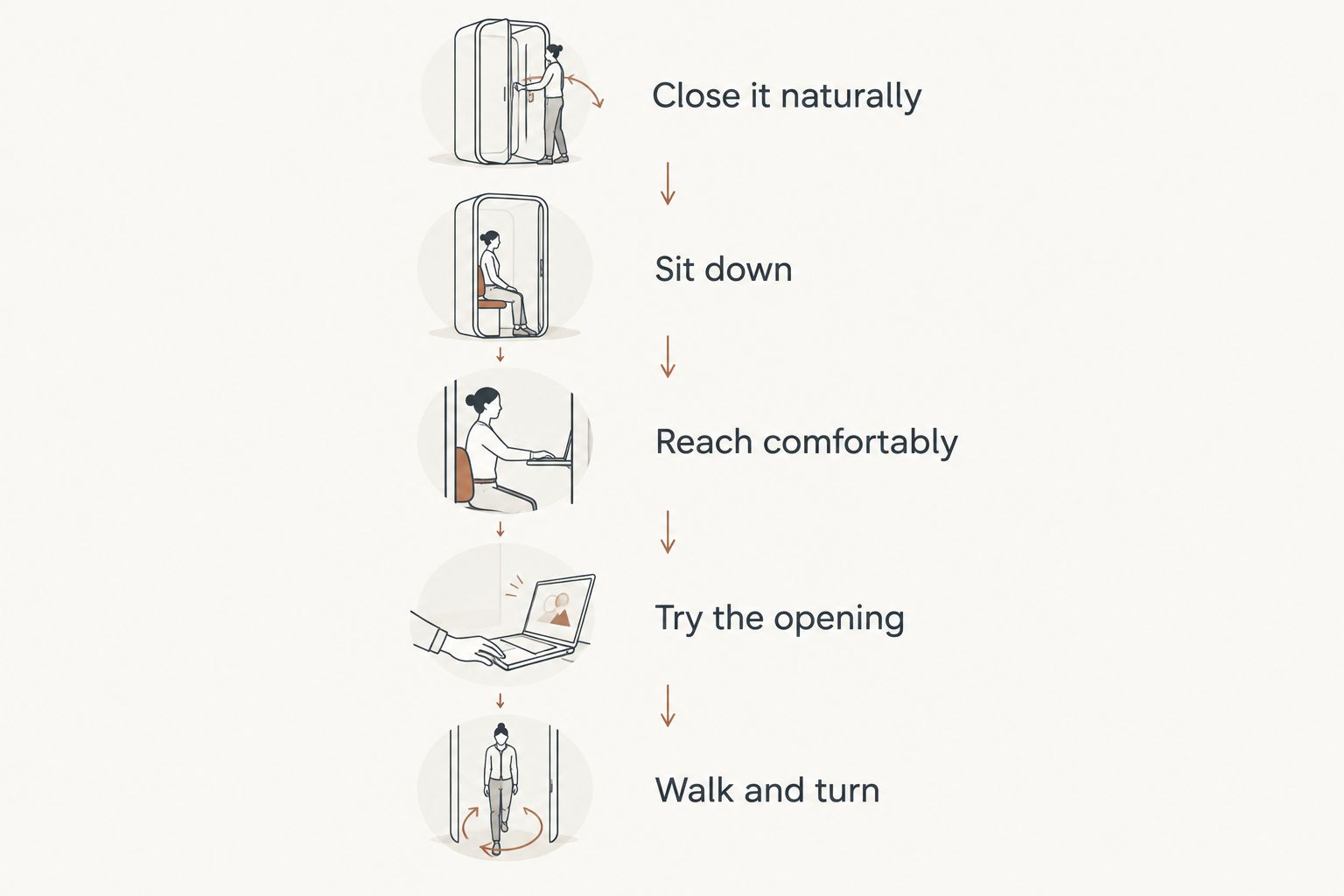
- Close it naturally. Bring the front together without stretching the fabric or tightening the belt to force coverage. If it only stays closed under tension, the fit isn't doing its job.
- Sit down. Check whether the panels separate across your belly or thighs. A robe that looks fine standing can need constant adjustment when you're seated.
- Reach comfortably. Move your arms forward and overhead. Notice pulling at the shoulders, underarms, or back before focusing only on bump room.
- Try the opening. Unfasten and refasten it while seated. You want access you can manage without wrestling with excess fabric.
- Walk and turn. Check the hem, belt ends, and sleeves. Nothing should trail underfoot or get in the way of your hands.
This is a practical fit check for 2026, not a prediction that one size will fit through every stage. If the robe already needs careful positioning to work today, don't count on the label to solve that later.
Why pregnancy fit varies
The word nursing describes intended access. It doesn't tell you how the shoulders, waist, or front panels are shaped. Look at the actual garment details before deciding whether it will work before birth.
- Front overlap: A longer belt can't replace fabric that's missing across the front. Check coverage while seated as well as standing.
- Closure placement: A fixed fastening position gives you less freedom to move the closure. Try it where it actually rests rather than assuming it will sit above your bump.
- Shoulder and arm room: Extra width through the body doesn't fix tight sleeves or pulling across the upper back.
- Fabric behavior: Composition and stretch are different details. Don't assume a bamboo blend stretches simply because it contains bamboo viscose.
- What you wear underneath: Pajamas, a tank, and a nursing top each change how much room you need. Test with the layer you expect to use.
Your fit preference matters, too. Some people want the robe fully closed; others use it open over a comfortable outfit. Neither preference changes the need for free movement and sleeves that stay out of the way.
Should you size up for pregnancy?
Not automatically. Use the robe's own size chart and your current measurements before choosing a larger size. A size increase adds room according to that garment's cut, not only where your bump needs it.
Sizing up can also leave the shoulders loose or the sleeves cumbersome. If you need substantially more front coverage but the upper body already fits generously, a different cut is a better question than another size.
When a chart includes garment measurements, compare those with a robe you already find comfortable. When it includes body measurements, follow that chart's instructions. Don't treat the two types of measurement as interchangeable.
Avoid buying a deliberately tight fit for after birth and expecting it to work during pregnancy. Choose for the body wearing it now. Later, reassess the closure, room, and comfort rather than assuming recovery or feeding will follow a particular timeline.
Is a maternity robe better than a nursing robe?
A maternity robe isn't automatically better than a nursing robe. A maternity label points toward pregnancy use, while a nursing label points toward feeding access. Neither label replaces a fit check.
If your main need is room across your bump, focus on the cut and coverage. If your main need is easy opening after birth, focus on how the front works while you're seated. For a robe you want to use during both periods, check both needs separately.
You also don't have to replace a regular robe that already works. If it fits comfortably, opens easily, and doesn't interfere with your hands, it can do the same everyday job. A new label isn't a reason to retire something useful.
Can the same robe go in your hospital bag?
Yes, the same robe can go in your hospital bag if it still fits comfortably and meets your hospital's requirements. Think of it as an optional personal layer, not a replacement for clothing or access your care team needs.
For a 2026 hospital bag, ask the hospital about personal clothing before planning what you'll wear. Choose an opening you can manage, a hem that stays clear of your feet, and sleeves that don't obstruct your hands. Avoid assuming that a robe suitable for home will suit every part of your hospital stay.
Pack an underneath layer you're comfortable wearing on its own. That way, removing the robe doesn't become a full outfit change. You can also leave it off when you don't want the extra fabric.
Don't buy around a promise of better sleep or a smoother recovery. A robe's job is much simpler: give you a wearable layer that's easy to open and comfortable to move in.
Fabric matters, but fit still comes first
Choose fabric by how you'll use the robe. A layer for sitting on the couch has a different job from something you put on after a shower. Neither job tells you whether the robe has enough front coverage for pregnancy.
Goumikids women's robes are best for shoppers seeking a stated bamboo viscose and organic cotton blend. The Sandstone and Rose descriptions specify 70% bamboo viscose and 30% organic cotton. Those are composition facts, not proof of maternity sizing, stretch, or a particular level of warmth.
When comparing a lounge robe with waffle bathrobes for women, separate fabric texture from function: a waffle texture alone doesn't tell you whether a robe has nursing access or room for a bump. Look for those details in the garment's construction and measurements.
For 2026 purchases, read the care instructions for the exact item, too. Don't transfer washing advice from another robe because the fabrics sound similar. Your everyday layer needs a care routine you're willing to follow, not just a fabric description you like.
What the robe descriptions tell you
| Option | Best for | Confirmed detail | What still needs checking |
|---|---|---|---|
| WOMENS ROBE | SANDSTONE | Shoppers seeking the stated bamboo viscose and organic cotton blend | Description lists 70% bamboo viscose and 30% organic cotton | Pregnancy fit, opening, measurements, and care instructions |
| WOMENS ROBE | ROSE | Shoppers seeking the same stated blend in Rose | Description lists 70% bamboo viscose and 30% organic cotton | Pregnancy fit, opening, measurements, and care instructions |
The practical advantage here is a clear fabric composition. The limitation is equally clear: composition doesn't establish whether either robe fits your pregnancy needs. Choose only after checking the exact item's current details.


Try the everyday moment, not just the mirror
Before deciding, sit where you expect to feed or rest. Open the robe and notice where the panels fall. If you have to hold loose fabric away with both hands, that matters more than how tidy the robe looks on a hanger.
Try reaching for a nearby item without standing up. Check whether a sleeve covers your hand or the front pulls apart. These small movements reveal the adjustments you'll otherwise repeat throughout the day.
Then wear it over your usual lounge clothes for a normal task, such as getting a drink or folding laundry. A comfortable robe shouldn't need your attention at every turn. If it keeps slipping, gaping, or catching, choose another fit rather than accepting constant fuss as part of the job.
FAQ
Can I wear a nursing robe before my baby is born?
Yes, you can wear a nursing robe before birth if it fits your bump comfortably and lets you move freely. Check seated coverage and shoulder room rather than relying on the nursing label.
Do I need separate maternity and nursing robes?
No, you don't need separate robes if one garment fits comfortably during pregnancy and provides the access you want afterward. Recheck the fit as your needs change.
Should I buy my nursing robe a size bigger?
Don't size up automatically; use the exact robe's size chart and your current measurements. A larger size can add unwanted room at the shoulders or sleeves without giving you the cut you need.
Is a wrap robe better for breastfeeding than a button robe?
A wrap robe offers adjustable front access, but it isn't automatically better than a button robe. Choose the opening you can manage comfortably while seated and check that loose fabric stays out of the way.
Can I bring my pregnancy robe to the hospital?
Yes, you can bring your pregnancy robe if it fits comfortably and your hospital permits personal clothing. Ask about clothing requirements and keep the hem clear of your feet.
Are Goumikids women's robes made with bamboo?
The Sandstone and Rose women's robe descriptions list 70% bamboo viscose and 30% organic cotton. That composition doesn't establish pregnancy fit or stretch, so check the exact item's measurements and construction.
Can I keep wearing a nursing robe after I stop breastfeeding?
Yes, you can keep wearing a nursing robe as ordinary loungewear after breastfeeding. Its usefulness depends on comfortable fit and the way you use it, not whether you're nursing.
One last thing
A long belt can make a robe close, but it can't create more front coverage. Check the fabric overlap before you judge the tie. That's the small detail to keep on your 2026 checklist, especially when the robe looks roomy in a standing photo.
You don't need the robe with the most features. You need the one that lets you sit, move, and open the front without a running list of adjustments.